Car Computer & Immobilizer Key Programming in Crowley TX (2026)
· Locksmith Crowley
How ECU/BCM immobilizer key programming and all-keys-lost really work in Crowley TX. Chip types, mobile locksmith limits, and 2026 DFW pricing.
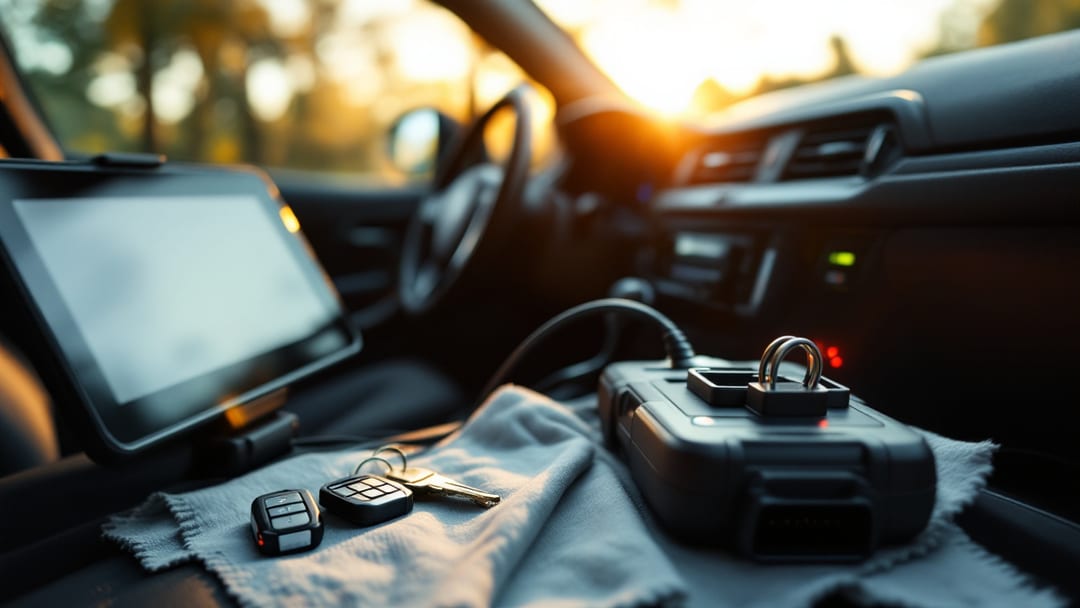
TL;DR
As of July 2026, on-site car computer and immobilizer key programming in the Crowley TX area typically runs $110 to $420 through Locksmith Crowley, depending on the chip generation and whether it's an add-a-key job or a full all-keys-lost. Call or text (817) 756-8838 and a mobile van reaches Crowley TX 76036, the FM 731 corridor, and Wynds Ranch fast. Three things decide the outcome: the transponder chip type buried in your key (4D, 46, 47, 48, 8A, or a rolling-code smart chip), whether the car's immobilizer module lives in the ECU, the BCM, or a standalone box, and whether any working key still exists. Add-a-key is quick and cheap; all-keys-lost means we have to talk to the computer directly, sometimes pulling a secure PIN before a single key will crank.
What does "immobilizer programming" actually mean?
Nearly every car built after the late 1990s has an engine immobilizer. It's an anti-theft system that refuses to start the engine unless it "sees" a valid electronic code stored in the key. Cutting a metal blade that fits the lock is only half the job — the other half is teaching the car's computer to trust the chip inside that key.
Here's the loop that happens every time you turn the ignition or push start: an antenna ring around the ignition (or an interior antenna, on push-to-start cars) energizes a tiny transponder chip in your key. The chip answers with a code. The immobilizer control module compares that code to the ones it has stored. If it matches, it tells the engine computer to allow fuel and spark. If it doesn't, the car cranks but won't run — or won't crank at all.
The National Highway Traffic Safety Administration credits electronic immobilizers as a major factor in the long-term decline of drive-away vehicle theft, which is exactly why programming a new key is a security event, not a hardware swap. See nhtsa.gov.
That security design is good for you and slightly inconvenient for key replacement. It means programming has to be done with equipment that can authenticate to your specific car.
Where does the immobilizer live — ECU, BCM, or a separate module?
"Car computer programming" is a loose phrase because the immobilizer function sits in different places depending on the make and year:
- Standalone immobilizer box: Common on 1998–2008 vehicles. A dedicated module near the steering column or under the dash holds the key codes.
- BCM (Body Control Module): Many 2008–2020 domestic and Asian vehicles fold immobilizer duties into the body computer that also runs lights, locks, and windows.
- ECU/PCM (Engine/Powertrain Control Module): Some platforms tie key data directly to the engine computer, which is why a replaced ECU can require re-marrying keys.
- Smart-key / RF hub: Push-to-start cars add a receiver module and often a steering-lock (ESL/ELV) actuator that also has to be in sync.
Why this matters to you: when a shop or dealer replaces one of these modules, the keys frequently have to be reprogrammed — and on a few platforms a virgin replacement module needs to be coded before it will accept any key. A good mobile locksmith identifies which module owns the immobilizer before touching anything.
What are transponder chip types 4D, 46, 47, 48, 8A, H, and G?
The chip is the heart of the whole system. Over the years manufacturers moved from simple fixed-code chips to encrypted rolling-code chips that are far harder to clone. Knowing your chip family predicts both the procedure and the price.
| Chip family | Rough era & makes | Security level | Typical handling | | --- | --- | --- | --- | | 4C | Late 1990s Toyota/Ford, fixed code | Low | Often cloneable onto a blank | | 4D (60/63/70) | 2000s Toyota, Ford, Mazda, Subaru | Medium | Clone or onboard program | | 46 (Hitag2) | GM, Nissan, Chrysler, Honda 2000s–2010s | Medium | Usually onboard or PIN-based | | 47 (Hitag3) | Newer GM, Hyundai/Kia, Honda | High | Encrypted, calculated codes | | 48 (Megamos) | VW/Audi and others | High | Often needs data pull | | 8A / H (Toyota G/H) | 2010+ Toyota/Lexus | High | Dealer or NASTF-secured tools | | Rolling-code smart | Modern push-to-start | Very high | Proximity fob, secure programming |
The takeaway isn't the hex numbers — it's that older, lower-security chips can often be cloned or added quickly, while newer encrypted chips (47, 48, 8A/H, smart) may require secure code retrieval and take longer. That's the difference between a 20-minute add-a-key and a two-hour all-keys-lost.
How is all-keys-lost different from adding a spare?
This is the single biggest fork in the road, and it's the question that most changes your bill.
Add-a-key (you still have one working key): The car is already willing to talk. The locksmith puts the system into learn mode, presents the new chip, and the immobilizer stores it. Fast, low risk, lower cost.
All-keys-lost (no working key at all): Now the car doesn't trust anyone. Depending on the platform, the locksmith may have to:
- Read the immobilizer data through the OBD-II port, or in some cases directly from the module.
- Retrieve or calculate the secure PIN / incode the car demands before it will enter programming mode.
- Erase the old key memory (so lost keys can't start the car) and write the new keys.
- Cut a working mechanical blade — often by code from the VIN, or by reading the door lock, since these cars still have a physical key for the door or a hidden emergency blade.
On some 2010-and-newer platforms, the secure code isn't freely available. Locksmiths who are registered with the National Automotive Service Task Force can request it through legitimate, tracked channels — the same framework dealers use.
The National Automotive Service Task Force exists so that independent, vehicle-security-registered locksmiths can obtain the same secure key codes and immobilizer data that dealerships use, under a verified-identity system. See nastf.org.
What can a mobile locksmith actually do at your car in Crowley?
Plenty — and it's worth being honest about the edges too. A well-equipped mobile locksmith can handle the large majority of cars in the Crowley and South Fort Worth area on-site:
- Cut mechanical blades by code or by decoding the existing lock.
- Program transponder keys and remote-head keys through OBD.
- Program proximity smart keys and key fobs for push-to-start vehicles.
- Perform all-keys-lost on most domestic, Toyota/Honda/Nissan, and many Hyundai/Kia platforms.
- Diagnose a no-start that turns out to be a chip or antenna problem, not a dead battery.
Where it gets platform-specific: certain late-model German makes (some BMW, Mercedes, Audi) and a handful of high-security systems may be spare-key-only from an independent, or genuinely dealer-only for all-keys-lost. A reputable locksmith tells you that on the phone instead of driving out and improvising. If your vehicle is one of those, we say so up front.
What does immobilizer key programming cost in the Crowley TX area in 2026?
Pricing depends far more on chip generation and key type than on the make's badge. These are realistic 2026 DFW mobile ranges, parts and on-site programming included:
| Job type | What's involved | Typical 2026 DFW range | | --- | --- | --- | | Add spare transponder key | You have a working key | $110 – $190 | | Add spare smart/proximity fob | Working fob exists | $170 – $300 | | Transponder all-keys-lost | Read module, cut blade, program | $180 – $320 | | Smart-key all-keys-lost | Secure code + proximity programming | $260 – $420 | | High-security / secure-code pull | NASTF-sourced code required | $300 – $500+ |
A few honest notes: prices climb when the platform requires a secure code purchase, when the mechanical blade is a rare cut, or when you need two keys instead of one (many owners add a spare on the spot so they're never stranded again). After-hours and remote-location calls can carry a trip premium.
A typical all-keys-lost call near the FM 731 corridor
Picture a mid-2010s sedan parked outside a shopping center off the FM 731 corridor. The only key was lost at a job site, and the car cranks but won't stay running — the classic immobilizer symptom.
On arrival, the locksmith confirms the chip family and where the immobilizer lives (in this case, the BCM). Because there's no working key, the tool reads the immobilizer through the OBD port and requests the secure code. A blade is cut from the vehicle's key code so the door and ignition turn mechanically. With the code in hand, the old key memory is wiped — important, because it means the lost keys can no longer start the car — and two fresh keys are written and tested. Start, stop, restart, lock, unlock. Total time on site was under two hours, and the owner drove away with a spare in the glovebox. No car was towed, no dashboard was disassembled, and nothing about the story required a personal name or a made-up quote — that's just the standard shape of the job.
Does replacing my car's computer erase my keys?
Sometimes, yes. If a repair shop replaces your ECU, PCM, or BCM, the immobilizer relationship can be broken, and the keys may need to be re-learned to the new module. On a few platforms a brand-new module has to be coded before it accepts keys at all. This is a normal step, not a scam — but it's worth asking the shop whether immobilizer programming is included, because that's often where an independent mobile locksmith is faster and cheaper than sending the car back to a dealer.
FAQ
Can a locksmith program a key if I lost every key I own?
Yes, in most cases. All-keys-lost is a routine job for a properly equipped mobile locksmith. We read the immobilizer data, retrieve or calculate the secure code where the platform requires one, cut a mechanical blade from the code, then erase the old keys and program new ones on site so your lost keys can no longer start the car.
What's the difference between a chip key and a regular key?
A regular key only opens locks mechanically. A chip (transponder) key adds an electronic chip that the car's immobilizer must recognize before it allows the engine to run. That's why a hardware-store copy that "fits" your ignition will turn but won't start the car — the chip was never programmed into the computer.
Will programming a new key deactivate my old lost keys?
On most all-keys-lost jobs it can, because part of the procedure erases the immobilizer's stored key memory before writing the new ones. That's a security feature, not an accident — it means whoever found or took your old keys can't drive off with the car. If you're only adding a spare and keep your working key, your existing keys stay active.
Why won't a cheaper online key work on its own?
An online key blank is just metal and a blank or generic chip. Until the chip is programmed to your specific car and, on many models, the blade is cut to your lock, it can't start the engine or open the doors. Buying the part online and paying a local locksmith to cut and program it can save money, but the programming step still has to happen at the car.
How long does immobilizer programming take?
An add-a-key is often 15 to 30 minutes. A full all-keys-lost usually runs one to two hours, longer if a secure code has to be requested through NASTF channels or if the mechanical blade is an unusual cut. We give you a realistic time window when you call so you can plan around it.
Do you work on my exact make and model?
Most likely yes — the large majority of domestic and Asian cars around Crowley are fully mobile-serviceable. A small number of late-model German and high-security vehicles may be spare-only from an independent or genuinely dealer-only for all-keys-lost. Tell us the year, make, and model at (817) 756-8838 and we'll confirm before anyone drives out.
Get your key programmed on-site in Crowley
Whether you're adding a spare or fully locked out with no keys, we bring the diagnostic gear to you across Crowley TX 76036, Wynds Ranch, the Chisholm Trail Parkway corridor, and South Fort Worth (76140/76123/76134), plus Burleson, Joshua, and Benbrook. Call or text (817) 756-8838 for a straight quote — text a photo of your key and your VIN and we'll tell you the chip type, the procedure, and the price before we roll. English y Español, no problem.
Related reading and services:
- Lost car keys service
- Transponder key programming
- Smart key programming
- Key fob programming
- Ignition repair
- Areas: Crowley TX and Wynds Ranch
- Contact Locksmith Crowley
- Crowley TX car key replacement cost guide
- Smart key diagnostic: fob not working